
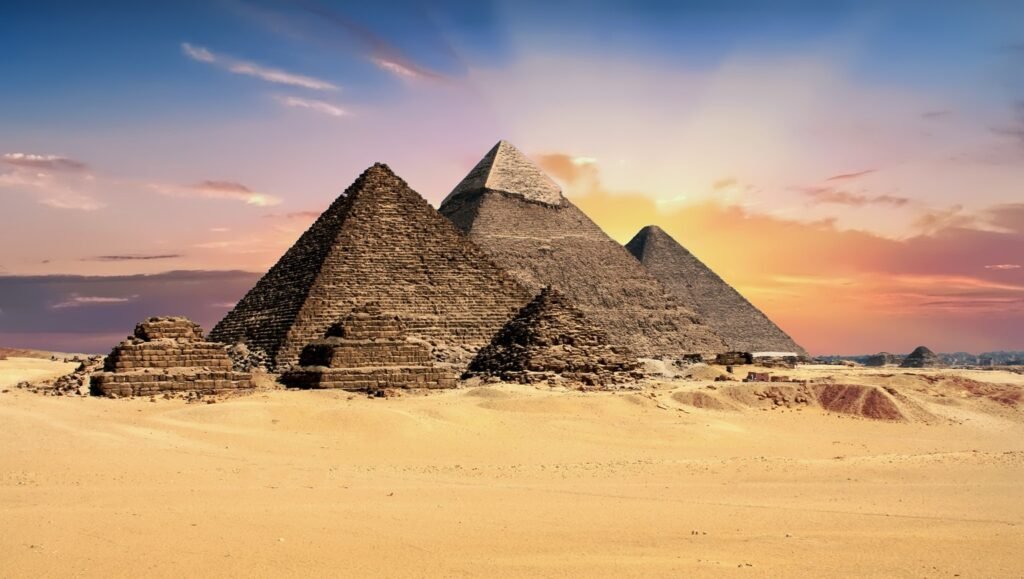
Ancient Egypt
Background
On our last post, about prehistory, we stopped in the metal ages, saying that soon enough the hability of writing would be developed. Well, that time passed and writing was developed in some places, like Sumeria. Amongst the first ones to develop writing, there was the Ancient Egypt. The civilization we’re just about to read about now.
Their writing system, their alphabet, was not like the alphabet we have today. The characters did not necessarily function the same way our letters do today. They were named hieroglyphs, that writing type is named hieroglyphic writing, or hieroglyphic alphabet.
There’s no ceremony to celebrate the beginning of a new civilization or a new era, like new years eve. But… We can say that there are findings that support that this civilization already existed during 3500 a.C..
Ancient Egypt was not the first civilization to develop writing. It was, though, a really important one amongst the first ones. One that inspired a lot of the concepts and cultural elements that made the european culture and history what it is. And it also influenced all the other cultures of the places that Europe invaded. Like the American continent, for instance, Oceania, etc..
The Art of Ancient Egypt
The art developed by the Egyptian culture reflected their religious views, their fundamental beliefs. In Ancient Egypt, their religion was the foundation of their culture and people’s lives. Not to mention the way they organized themselves socially and politically.
Their culture and their religion were extremelly devoted and concerned with the concept of DEATH. Actually, of life after death. So, we will see in this special about Ancient Egyptian art will feature a lot of mortuary moments. And objetcs that are related to death.
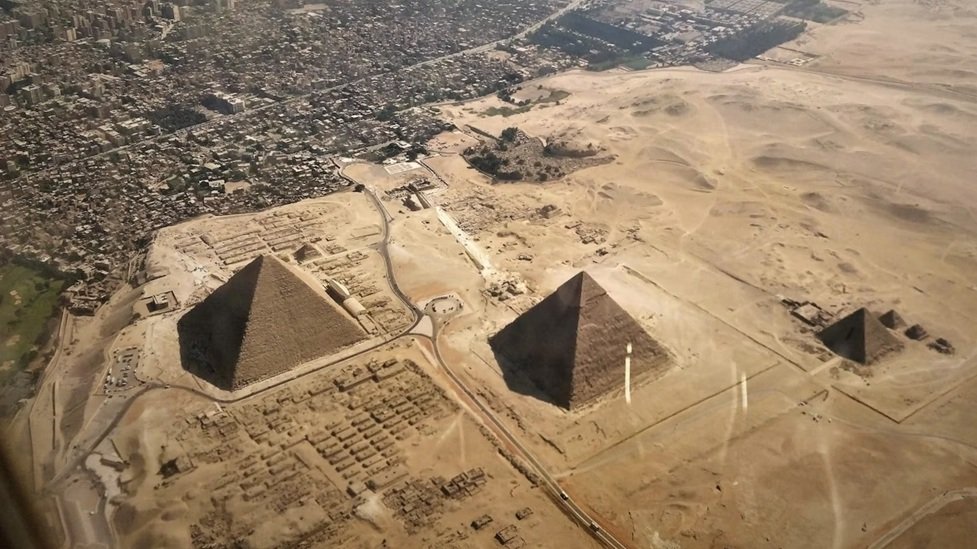
A whole part of the town was dedicated to the dead. This part of town was named “Necropolis”, that means city of the dead. More specifically the necropolis of Giza. This part of town still exists and shows beautiful monuments, like the Pyramids and the Sphynx.
Death is that important to this culture that, amongst their many Gods, we have a dead God: Osiris. He is the one that works as the supreme judge of the underworld. The “Book Of The Dead”, for instance, is an example on where to find the hieroglyphic writing.



The Pyramids, the Sphynx and the Necropolis of Giza
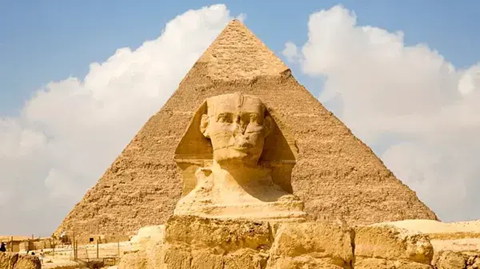
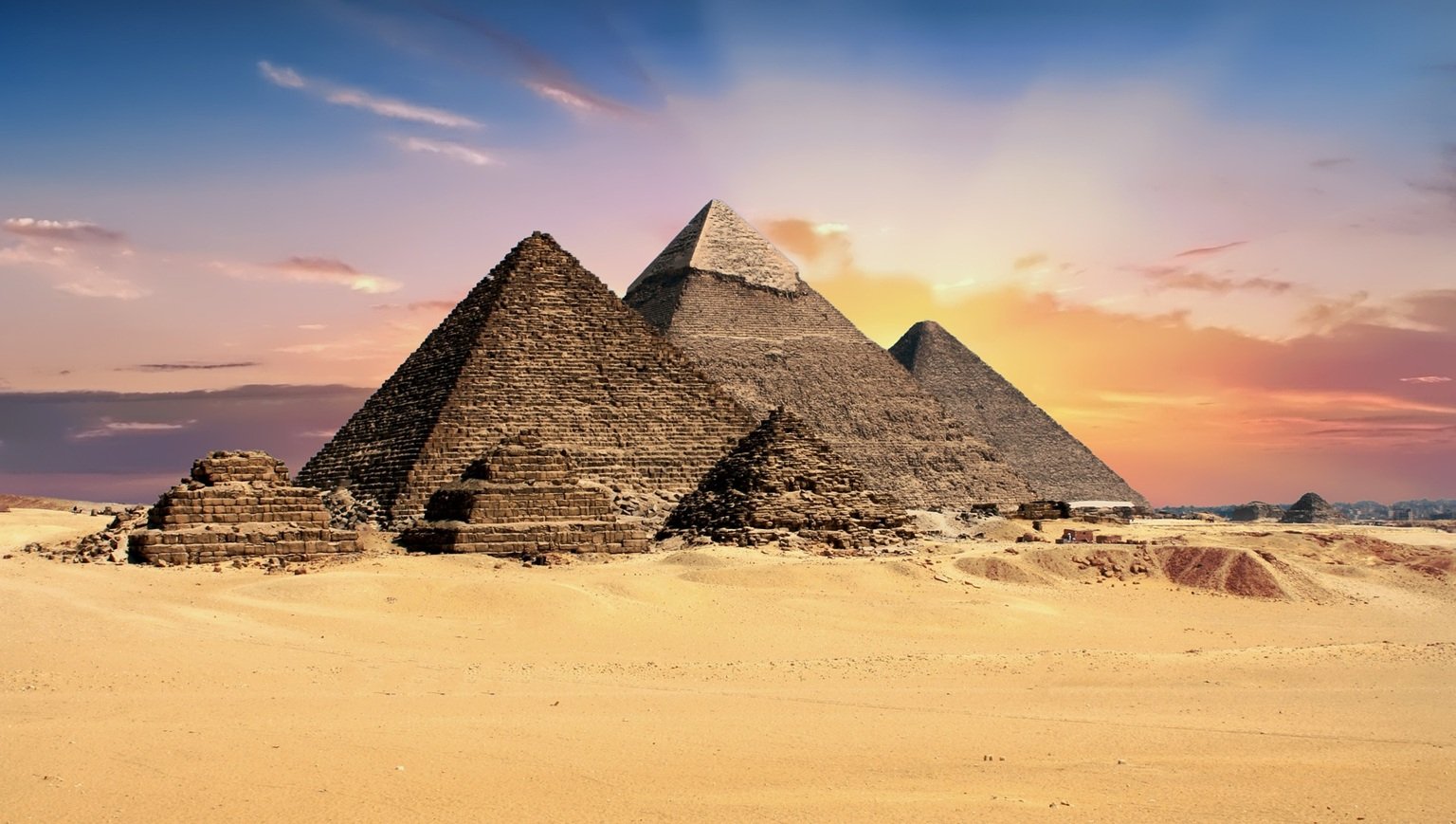
The most important works of art in the Ancient Egyptian culture are architectural. Not to mention that they are also mortuary monuments: The Pyramids of Giza. The most famous ones are the three big ones, named after their Pharaoh: Cheops, Chephren (or Khafre) and and Menkaure.
Inside the pyramids, you can find not only the body of the Pharaoh that names it. This body was kept in a sarcophagus, that is a structure that works at the same time as a coffin and an sculpture. And it’s made of premium luxury materials, like gold and precious stones.
Inside the pyramids, you can also find treasures and everything the Pharaoh will need when he wakes up after death. For his life after death. The ancient Egyptians believed life after death would happen in the same body, which means they would once come back to the body they already lived in. So… They needed to preserve it from the passage of time. How did they do it? In a process named “mummification”. Yes, there’s where the mummies from cartoons come from! This process removes the liquid parts and everything that might make it spoil and rotten faster, preserving it throughout time. This process slows down immensely the process of decomposition of the body. Many of those mummies show a lot of preserved bones and structures, even 5000 years later.
Egyptian feels eternal
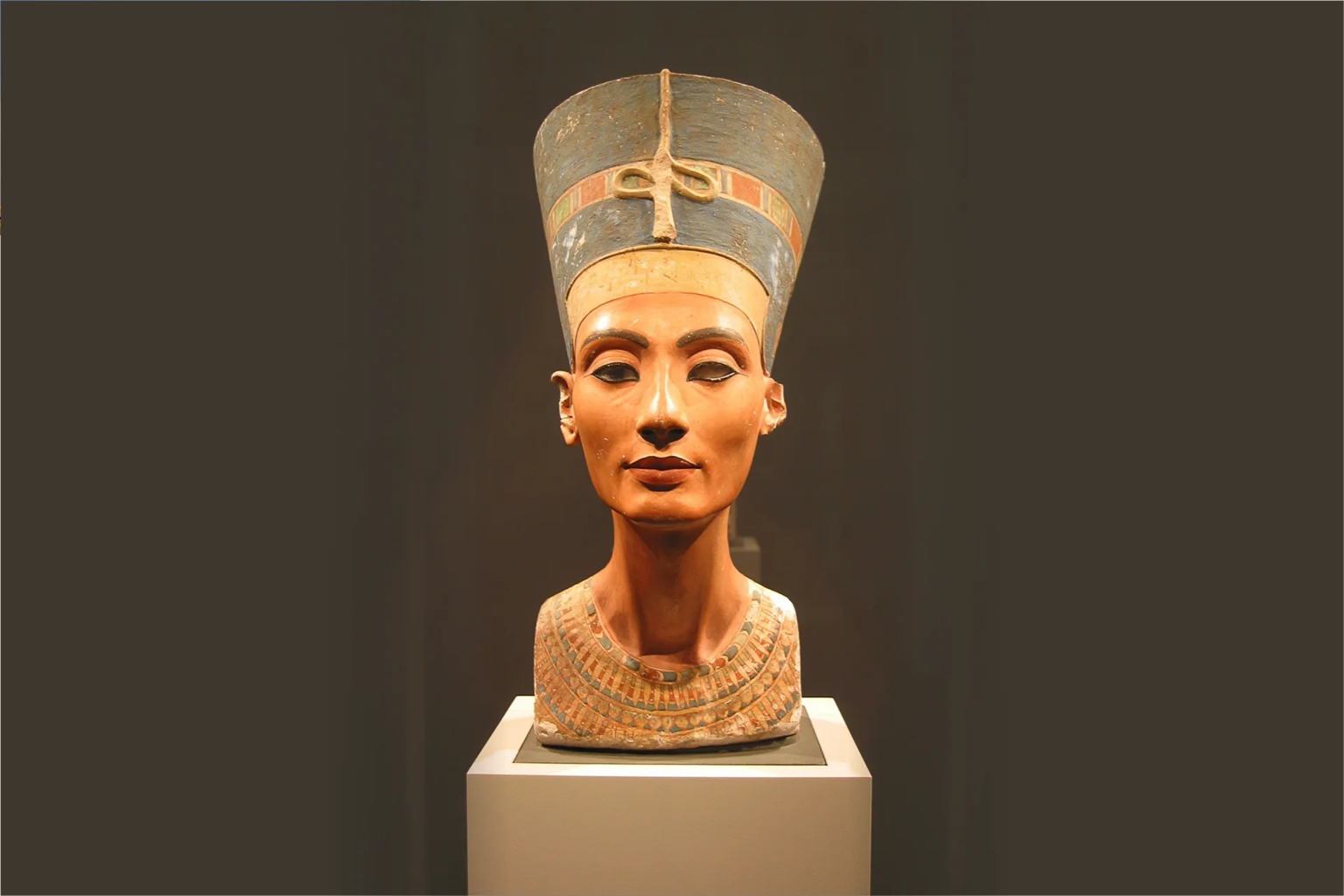
And here there’s a thing about the ancient egyptian art: It was build to last. It was built to consider time and to beat it up. It’s not an accident that the pyramids are still standing, it’s calculated, it’s intentional. The ancient egyptian culture stares the passage of time in a way that we don’t necessarily do. They believed in life after death, they believed that what they built should be there when they openned their eyes again when they came back from the dead. And, in a way, it still is. Who knows, maybe we’re not in the time they foresaw yet.
(that’s a joke)
Features of the Ancient Egyptian Art
Architecture
The overall features of the Egyptian architecture are: 1) Solidity; 2) The search for eternity; 3) The mysterious and impenetrable aspect of its buildings.
Painting
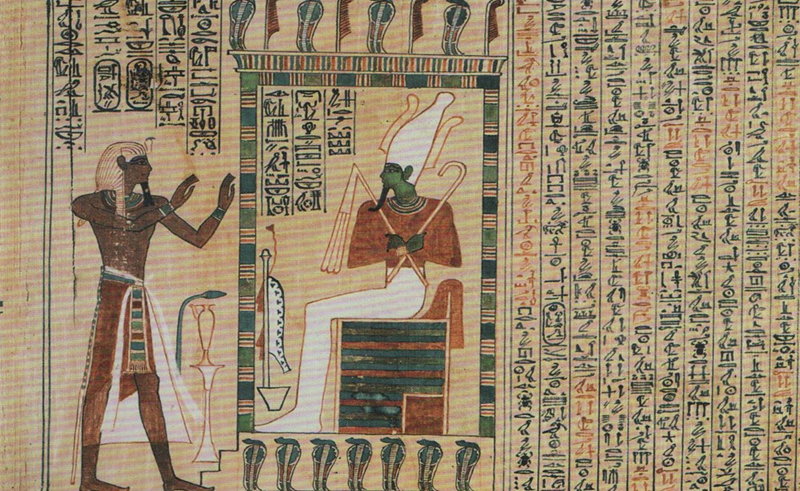
The general features of Ancient Egyptian Paintings are: 1) Two-dimensionality, which means it didn’t work deeply with the idea of volume, it only had two dimensions: Height and Width.; 2) Obedience to certain patterns when it comes to colors and certain graphics; 3) Law of Frontality (can be also named Rule of Frontality or even frontalism).
Law of Frontality (Rule of frontality or frontalism)
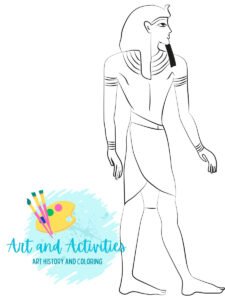
This rule says that the representation of people should follow certain instructions, such as: The eyes, shoulders and chest should be represented frontally, facing the viewer; but the legs, the head should be displayed from the side, in profile. This position is not easily obtained naturally, organically, in life. Try to pose like it and it will take some movements, it’s not how we usually stand. However, it is a way to show most parts of the human body. So… The law of frontality is a way to depict most parts of the human body as possible.
An art of rules and patterns
We can notice that, to Ancient Egyptian art, the rules and patterns are central to this art. Because the motivation for the existence of this art was not necessarily to create a persona of each artist, or to portray their individual creativity. It’s the opposite, actually: The Egyptian Ancient artist has created an anonymous art that reveals how much each artist dominates the techniques, the rules and the conventions that produced the ideal appearance of human beings, to them, and not their real image. Specially when it came to kings. Women usually were portrayed with lighter skin. It was a convention. And men usually had darker skins, larger shoulders different clothing.
Downloadable Activities on .PDF
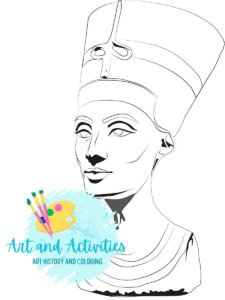
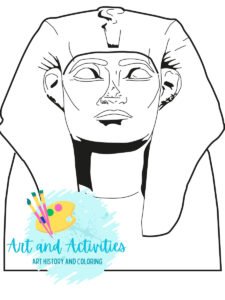
Coloring pages Ancient Egypt Art |
||
|
Green – free for use |
||
 |
 |
 |
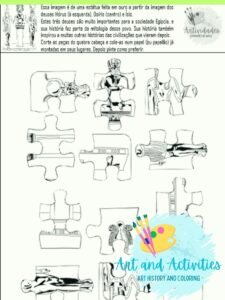
Puzzle for coloring – Ancient Egyptian Art |
| Green – free for use Red – Buy them on my TPT |
 |
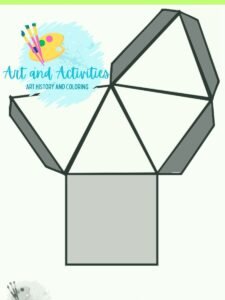
Build your own Necropolis of Giza on paper – Ancient Egyptian Art |
| Green – free for use Red – Buy them on my TPT |
 |



a
 |
 |
 |
|