Carnival
Carnival is a popular party that happens in different places in the world and has christian origins. It usually happens between february and march, always 40 days before Lent (the Lenten season).
The Lenten Season and Carnival
The Lent is an importante time for christians, specially catholics. It’s about the 40 days Jesus, it’s prophet, wondered around the desert, before the events of Easter. Lent, to christians, is a time that is characterized by penitence, charity, fasting, abstinence of alcohol and intimate physical touch, out of respect to the events that will lead up to Easter.
If the Lent is a time of absense, of not doing certain things, carnaval is a preparation for this time. For this absense. Which means even some kind of exaggeration. In this tradition, it’s a time dedicated do play around, to eat whatever you want, to drink how much you feel like, to make noise, to get physical touch as much as one would enjoy. Carnival is a feast of the “carne”, of the flesh. Of the body.
Carnival around the world
In different places, carnaval has created different traditions. Masquerade balls, for instance, will start in Venice, Italy, and will happen quite often during carnaval. Besides the masks, the italian carnaval will also be deeply connected with the theater of “Commedia dell’arte”, a medieval form of popular theatre. And this connection will make certain characters from this kind of theatre to become important representations and recurrent presences in the carnaval festivities and rituals, like Pierrot, Harlequinn and Columbine.
Entrudo
We will also have different practices during carnival, like the “entrudo”, wHich is a portuguese carnival tradition of throwing water, flour and little balls called “little scented lemons” (or limõezinhos de cheiro) at other people in the streets.
Those scented lemons, or limõezinhos de cheiro,were made out specifically for this occasion. And they looked like small and colorful little calls filled with cologne.
The entrudo was also really popular in Brasil during the colonization period.
Carnival in Brasil
Being a country made mostly by catholics, a christian religion, Brasil has developed this festivity all throughout its territory. Different states celebrate it in different manners, though, with different rhythms and practices. While in Rio de Janeiro we will have different parties on the street with a lot of costumes and samba bands, we will also have the famous parade of the samba schools named “Desfile das escolas de samba”.
Meanwhile, in Salvador, in the state of Bahia, we will have huge trucks packed up with bands and singers being followed by people partying. Those are named the “trios elétricos”. In Bahia, you will also have some african rooted bands. Like Olodum and Timbalada, and blocks like Filhos de Ghandy and Ilê Aiyê.
In Recife and Olinda, in Pernambuco, there are parades of huge dolls made after important personalities throughout the year for that community. Plus, they will also have different bands playing a very popular rhythm named “Frevo”.
Carnival in the arts
Carnival actually shaped a lot of art forms as we know today. It’s a place that welcomes different forms of artistic and cultural expressions. The work of sculpturers on the boats of the parades, or even in the Olinda’s dolls, it is something memorable. Each new year, new different art forms are shared during this time frame for people to appreciate on the streets, on TV, etc..
It does also make his own music, whether that being new sambas enredo (the rhythm of the samba schools in Rio), the frevos, the axés… It creates its own rhythms and different songs. And that creates a whole new repertoire.
References to carnival in the arts
Not only the carnival produces, by it self, a lot of different art forms. But it also does inspire a lot of different artists in its creations, in different fields.
References to carnival in the visual arts
All over the world, different plastic artists, in different times, will use carnival as an inspiration to their works. Artists suck as Miró or Tarsila do Amaral will have paintings with this festivity’s name as a title.
Besides them, there’s also Candido Portinari, Pieter Brugel, Hélio Oiticica, Carybé, Heitor dos Prazeres, Picasso, Cézanne, and many m0re.
References to carnival in the movies
Cinema will portray carnival under a bunch of different lights. There will be so many documentaries made about the festivities and the holiday itself. And they are made to not only show the different possibilities, but also to highlight the impact of carnaval in society.
There are also movies that portray carnaval as an important time during it’s characters lives. And there are movies that are set during the holiday. Like “Ó Paí Ó”, “Dona Flor e Seus Dois Maridos”, “Orfeu da Conceição”, etc..
Also, there are movies that will use some important characters of said festivity to tell stories, or even as a reference on their names. For example, there’s a character in the DC Universe named Harley Quinn, that is inspired in the carnaval (and commedia dell’arte) character named Harlequin.
References of carnival in literature
Literature will reference this date just as the movies, whether it being by researching the festivity, or even having the holiday as an important moment for the characters.
As references we have Vinícius de Moraes, Jorge Amado, Manoel Bandeira, etc..
References of carnival in music
Music is a special field for carnival. Cause not only it creates all sorts of different musics, like the frevos and sambas enredos each year. But it also shows up as inspiration.
It’s hard to separate what is necessarily a reference to carnaval and which songs were made for the festivity it self. Both will play during the parties.
There are important names like Chiquinha Gonzaga, Olodum, Dona Ivone Lara, Chico Buarque, etc..
References to carnaval in dance
Dance is also a field that is constantly present during the holiday. Some dances were invented for carnival, and some others are used and inspired by it. Samba, for instance, is really important to the samba school’s parade in RIo. Just as much as frevo is to Pernambico. And pagode baiano and Axé are to Bahia.
Carnaval is made of dance.
Activities about carnaval
 |
 |
 |
 |
 |
| Carnival Block – Hector Carybe
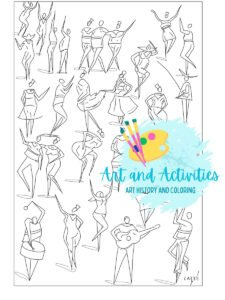
Bloco de Carnaval – Hector Carybé for coloring |
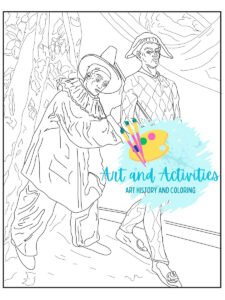
Mardi Gras – Paul Cézanne
Martes de Carnaval – Paul Cézanne for coloring |
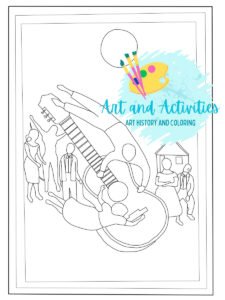
Djanira Motta e Silva – Orpheus
Djanira Motta e Silva – Orfeu da Conceição for coloring |
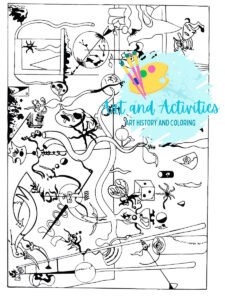
Carnival of Harlequin – Joan Miró
Carnaval D’Arlequin – Joan Miró for coloring |
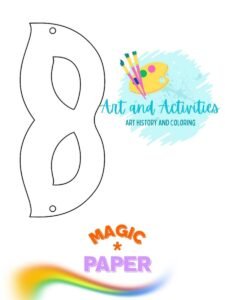
Carnival Magic – Paper Mask
Magic paper activity with a carnaval mask |